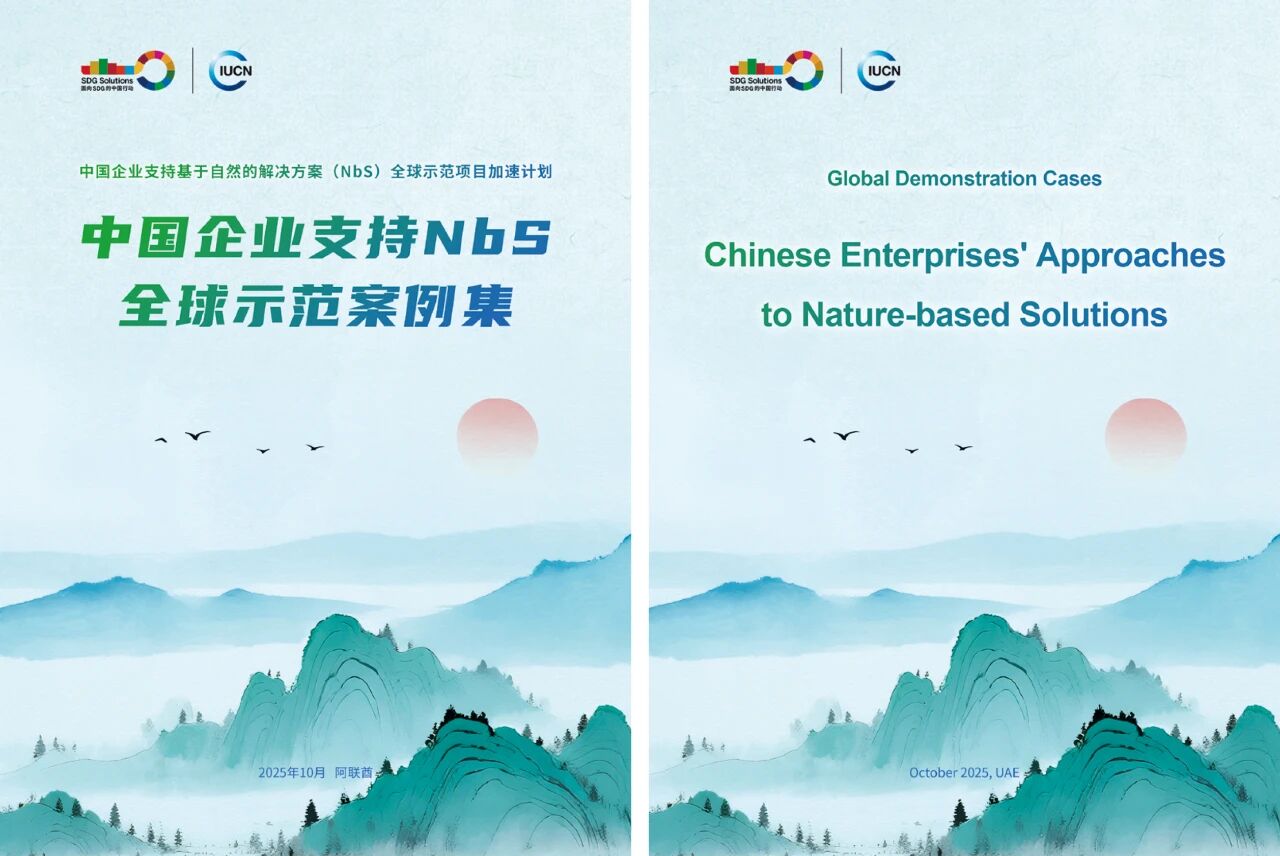
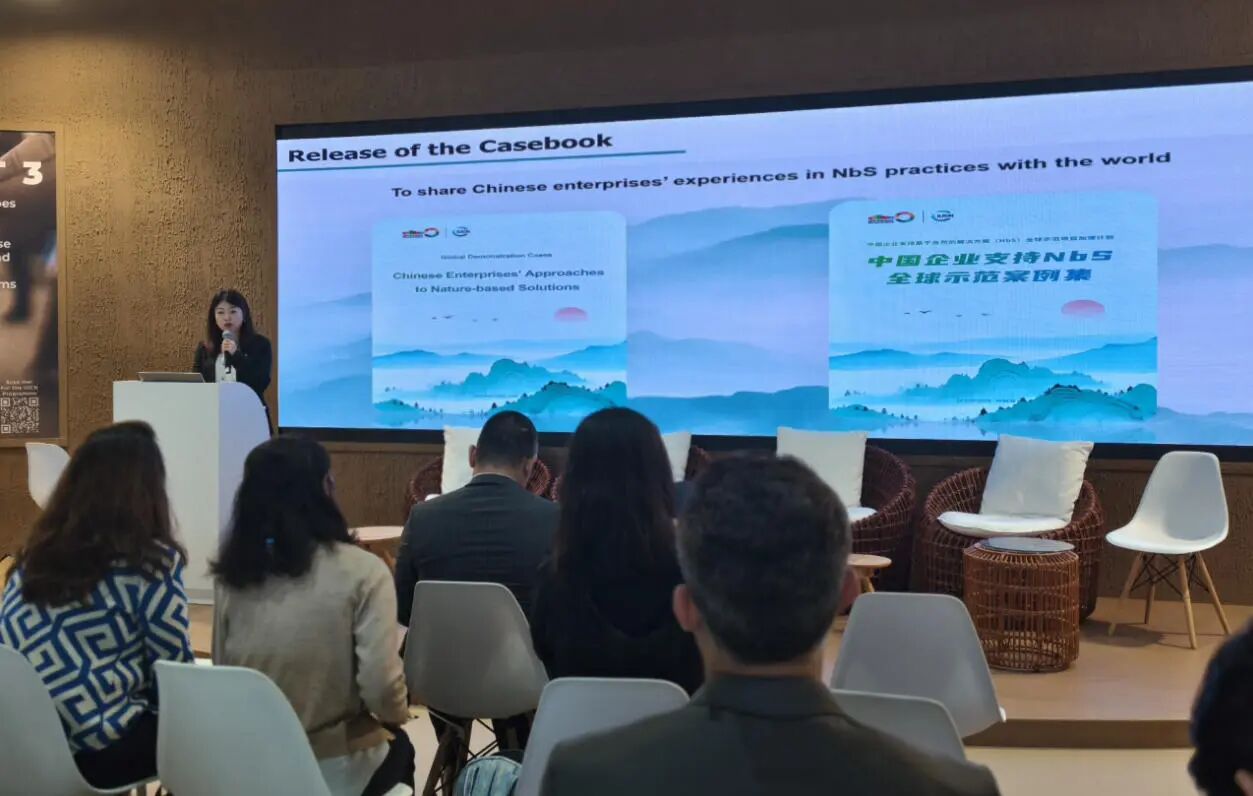
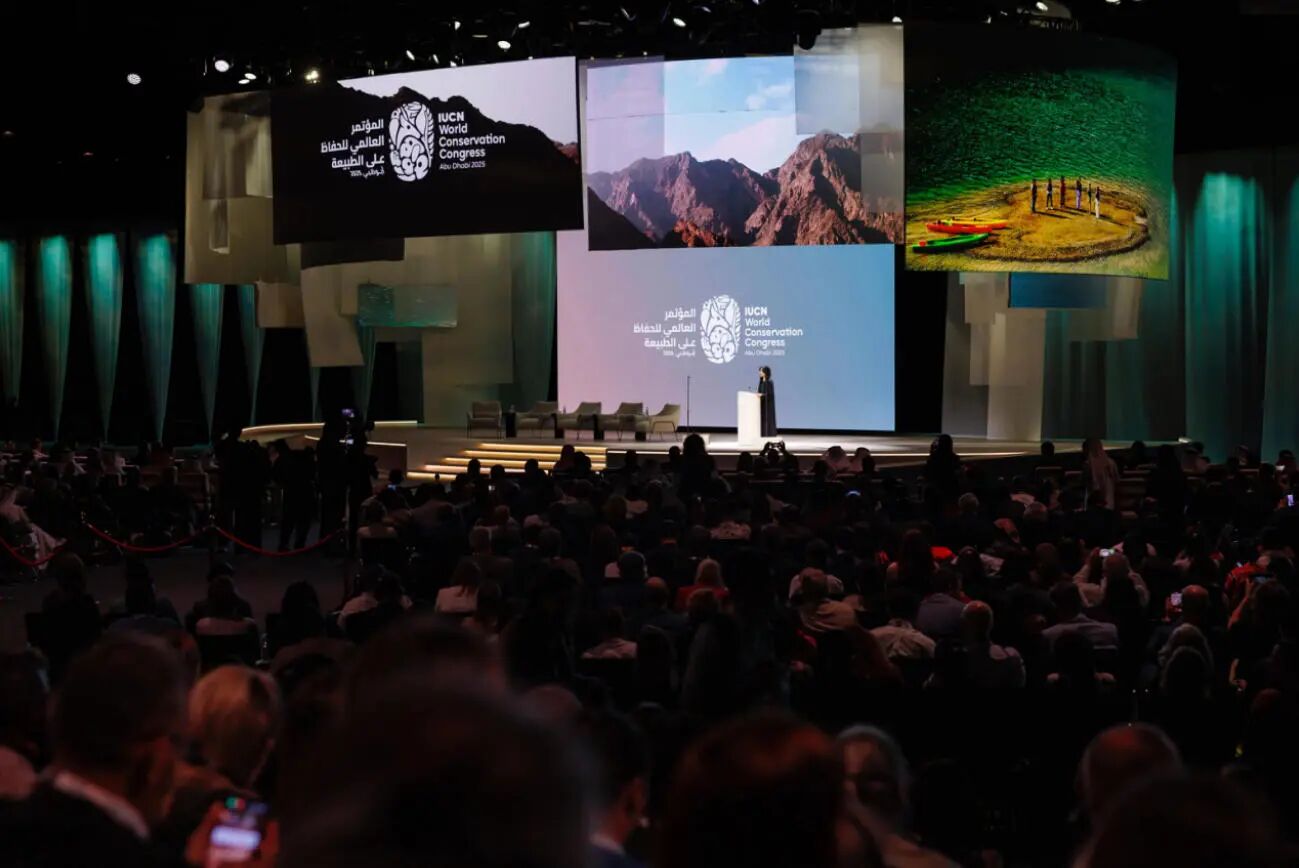
On October 11, 2025(local time),the Global Demonstration Cases: Chinese Enterprises' Approaches to Nature-based Solutions were unveiled at the 2025 World Conservation Congress(WCC) at ADNEC Centre Abu Dhabi. Exemplary NbS from State Grid, Ansteel, Guohua Energy, China Shengmu and other companies drew widespread attention, demonstrating Chinese enterprises' innovative exploration in NbS and providing "China’s solutions" for global businesses seeking to coordinate industrial development with ecological conservation.
Nature-based Solutions (NbS) are defined as actions to protect, restore and sustainably manage natural and modified ecosystems to address societal challenges, benefiting people and nature at the same time. They are recognized as potentially contributing 30% of the emissions reduction goals under the Paris Agreement. As a global leader in NbS implementation, China provides valuable experience worldwide based on its practical explorations in this field.
To showcase Chinese enterprises' innovative NbS globally, the "GoldenKey — SDG Solutions" launched the Global NbS Accelerator program with support from IUCN China and guidance from over ten renowned NbS experts. Twelve representative cases were selected from numerous corporate practices across energy, power, mining, agriculture and other sectors. They were compiled into the Global Demonstration Cases:Chinese Enterprises' Approaches to Nature-based Solutions to vividly present China's corporate NbS landscape.
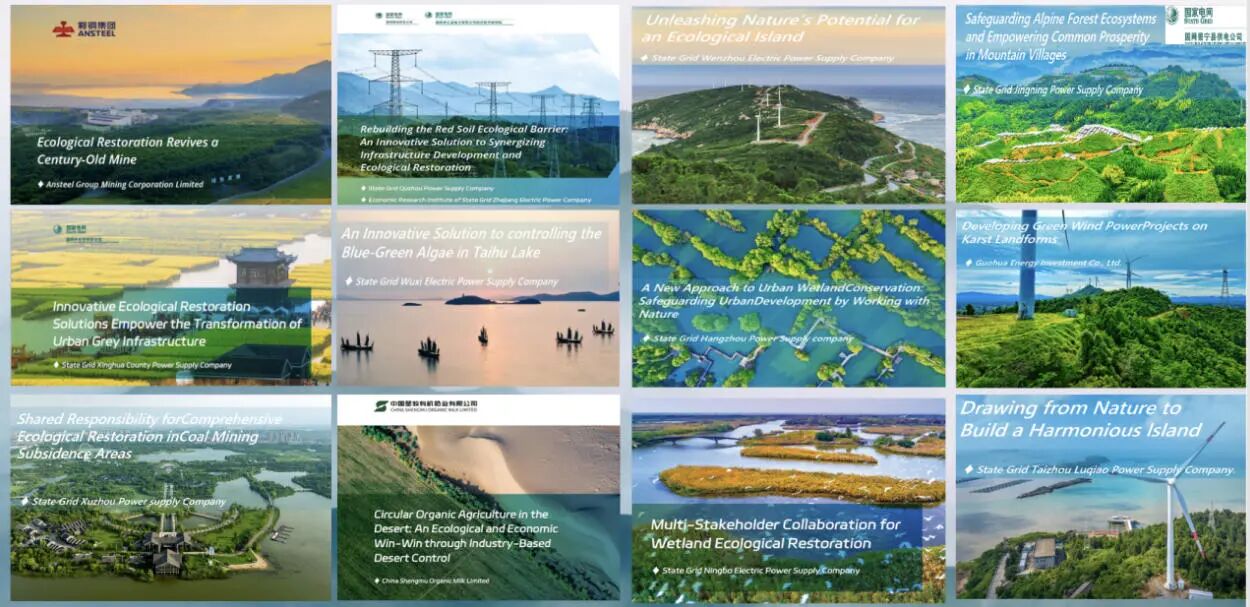
First, deep integration with core business operations. Leading enterprises have moved beyond “philanthropic projects” and embedded NbS into key business process such as operations, risk control, and enterprise-community relations.
Second, low-impact development and ecological restoration have become mainstream. Enterprises proactively reduce their ecological footprint throughout the project lifecycle and restore damaged ecosystems.
Third, technology empowerment enhances restoration efficiency. Big data, IoT, and other technologies have injected “intelligent genes” into NbS.
Fourth, multi-stakeholder collaboration pools governance synergy. Successful NbS practices require coordination among governments, enterprises, research institutions, and communities.
Deng stressed these cases prove that NbS are not a cost burden, but a strategic asset that drives innovation and enhances resilience.We believe that when more enterprises engage in NbS, the grand vision of harmonious coexistence between humans and nature will become true!
Wang Pengbin, Nature-based Solutions Advisor of Nature-based Solution Management Hub, noted the release not only aligns with WCC 2025's theme "Powering transformative conservation," but also provides corporate-level implementation support for the Kunming-Montreal Global Biodiversity Framework and UN Sustainable Development Goals. As crucial participants in green global transition, Chinese enterprises offer transferable experience through NbS practices while contributing to building "a just world that values and conserves nature."
The cases were released during a side event co-hosted by IUCN's Climate Change and Energy Transition team and China Renewable Energy Engineering Institute(CREEI), focusing on "Transitioning to a Nature-positive Economy and Society." The event aimed to promote renewable energy projects such as wind and solar energy, achieving climate benefits, protecting biodiversity and improving the well-being of local communities. The case release represents concrete implementation of this vision, creating a key window for sharing China's sustainable development experience during the event.
Organizers of the side event stated the launch represents a significant breakthrough in global corporate NbS practice, pledging to advance cross-sector cooperation for broader adoption of these innovative experiences, accelerating the global transition toward a nature-positive economy and society.
Global Demonstration Cases:Chinese Enterprises' Approaches to Nature-based Solutions
 The World Conservation Congress (WCC), IUCN's premier global environmental convention convened every four years, concluded its 2025 session in Abu Dhabi after seven days of intensive proceedings (9-15 October). This edition made history as the largest-ever gathering of its kind, attracting over 10,000 registered participants and featuring an unprecedented number of events and sessions. The congress served as a critical multilateral platform, bringing together representatives from national governments, conservation agencies, academia, private sector, non-governmental organizations, Indigenous communities, and local stakeholders.
 Back
to top
Back
to top