Decoding Sustainable Palm Oil: From Industry Initiative to Global Action
鈥斺€擨nterview with Joseph D鈥機ruz, CEO of RSPO
By Correspondent Wang Qiurong from China Sustainability Tribune
Palm oil, the world鈥檚 most produced and widely used vegetable oil, has an annual consumption of over 70 million tonnes and is deeply integrated into every aspect of human production and life, from food processing, daily chemical products to bio-fuels. However, problems such as the risk of deforestation and the loss of biodiversity brought about by traditional palm oil cultivation have made sustainable transformation a must-answer question for the industry and an important issue for global climate governance and ecological protection.
Sustainable palm oil has developed rapidly as global awareness of sustainable development has increased. Promoting the production and consumption of sustainable palm oil has escalated from an industry initiative to a global consensus. 2025 is seen as a 鈥測ear of critical action鈥?in the field of global environmental governance. The annual Global Roundtable Conference on Sustainable Palm Oil (RT 2025), hosted by the Roundtable on Sustainable Palm Oil (RSPO), was held in Kuala Lumpur, Malaysia on November 3-5, 2025, bringing together forces from all sectors of the global supply chain to explore the path and future of industry transformation.
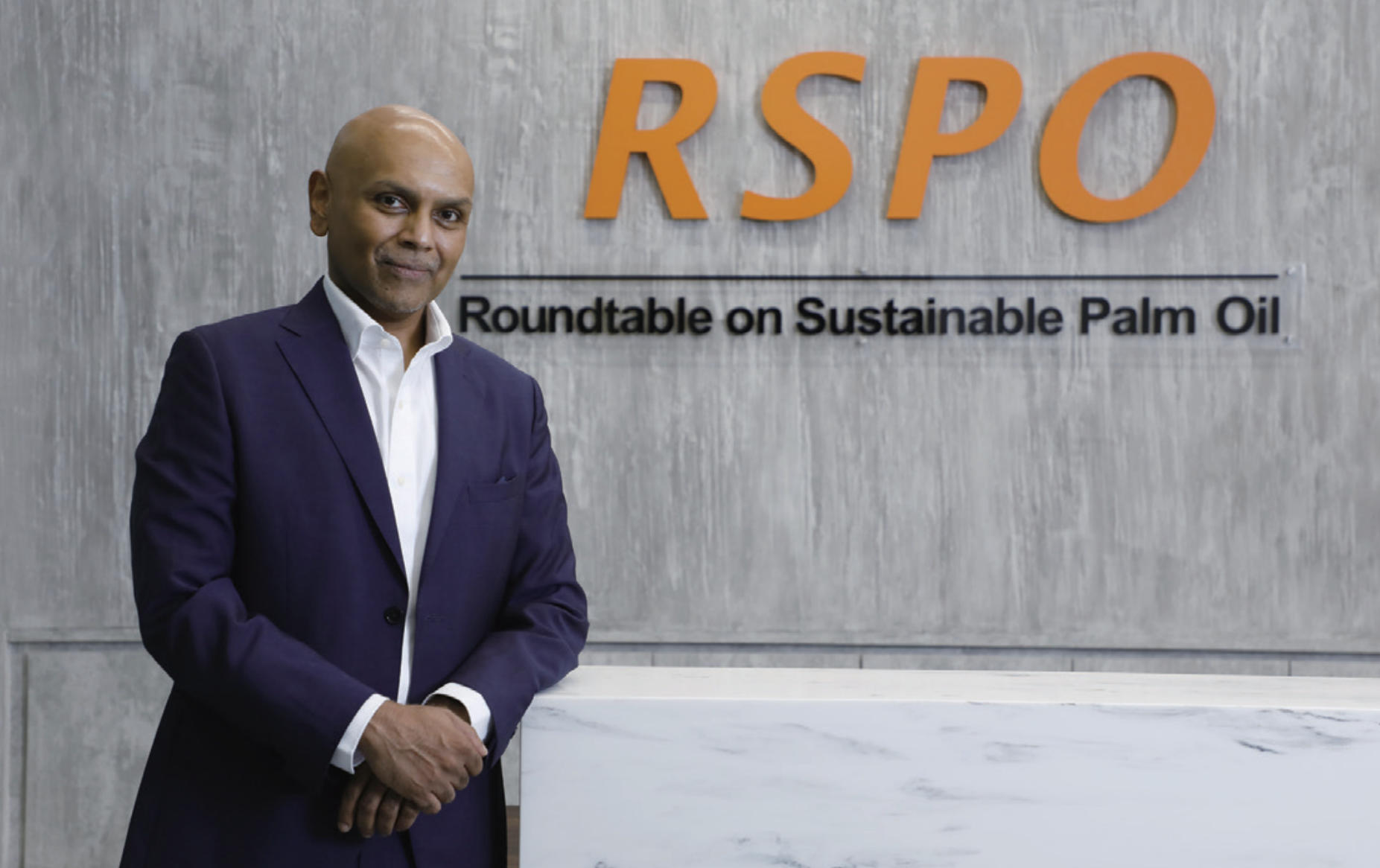
Mr. Joseph D鈥機ruz, Chief Executive Officer of RSPO
RSPO has led the way in building and implementing industry standards over the past 20 years as a core driver of global sustainable palm oil development, with more than 6,200 members worldwide. In 105 countries and regions, it has helped 5.1 million hectares of oil palm plantations obtain certification, covering 24 countries, setting a benchmark for the global sustainable palm oil industry. During the RT 2025, correspondent from the China Sustainability Tribune (CST) conducted an exclusive interview with Joseph D鈥機ruz (JD), the CEO of RSPO, and had an in-depth conversation on core topics such as the achievements and future goals of sustainable palm oil, regional practices, and the role of China.
Providing a model for sustainable development in the global industry
CST: Looking back over the past 20 years, what do you think are the main achievements of RSPO in promoting sustainable palm oil development? What positive impacts has RSPO brought to global sustainability, particularly climate change mitigation and biodiversity conservation?
JD: The main results are reflected in two aspects. On one hand, a global collaborative industrial cooperation platform has been established, bringing together more than 6,200 members from the entire supply chain, including planting, trade processing, retail, manufacturing, banks and investors, and international environmental and social institutions, to jointly define standards and practice paths for sustainable palm oil, transforming sustainable development from a concept into an industry consensus. On the other hand, a quantifiable sustainable value verification system has been established to prove the feasibility and advantages of sustainable production with data.
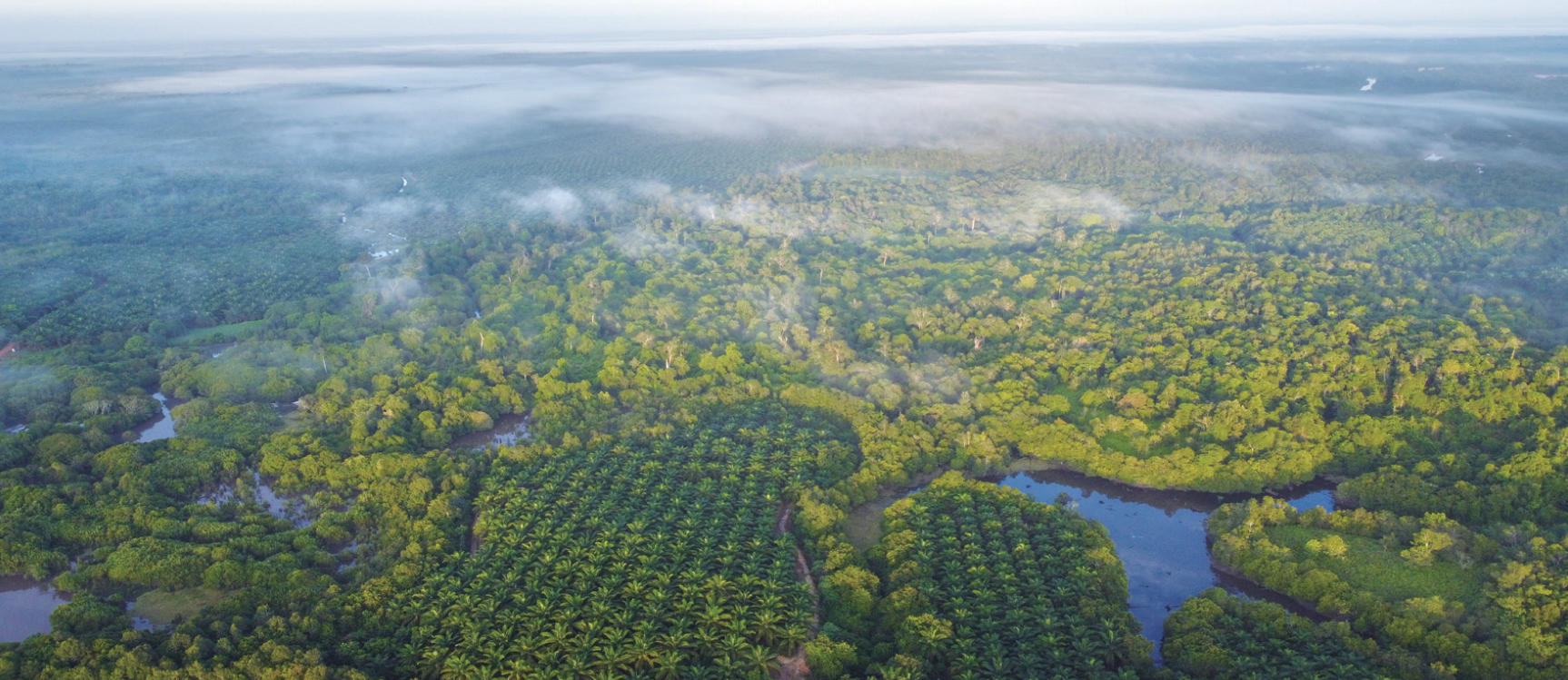
Oil palm plantation near high conservation Value Forest (Credit Photo_RSPO,PT.Bumitama Gunajaya Agro)
The impact of RSPO practices on global sustainability is reflected in three key areas: 1. In terms of production efficiency and resource utilisation, RSPO-certified palm oil plantations produce 4.3 metric tons per hectare, significantly higher than the 3 metric tons of uncertified plantations, achieving an efficient model of 鈥渉igher output with the same input鈥?and reducing resource waste. 2 In terms of climate and biodiversity conservation, the RSPO mandates its members to reduce climate impact in production and protect high conservation value areas (HCV). Currently, members have protected over 430,000 hectares of important ecological areas, setting an example of production and conservation in parallel. 3. In terms of model validation and industry leadership, it has successfully demonstrated the feasibility of the win-win model of 鈥渟ustainable production + environmental protection + commercial benefits鈥? dispelling the misconception that 鈥渆nvironmental protection necessarily sacrifices
benefits鈥? and providing a global model for sustainable industrial development.
CST: The theme of this year鈥檚 conference is 鈥淏uilding the Next 20: Sustainability in Action鈥? What do you think are the development goals for sustainable palm oil in the next 20 years? What challenges need to be overcome to make these actions a reality? How does RSPO plan to make sustainable development actions a reality?
JD: Our goal for the next 20 years is to grow the sustainable palm oil sector, meeting the demands of global economic and social development while achieving the combined value of climate friendliness and social equity through the transformation of the entire supply chain.
To achieve this goal, three major challenges need to be overcome: Climate action: Given the global climate emergency, it is necessary to further demonstrate that sustainable palm oil is a solution for 鈥渃arbon reduction + development鈥? rather than a contradiction. Social equity: Addressing the 鈥渉uman challenge鈥? ensuring that plantation farmers and workers have a reasonable livelihood and good working conditions. New market expansion: Build on the success in Europe, the United States and Japan, while pursuing new and emerging markets such as China, India and the Middle East, by adapting sustainable standards to local needs.
To achieve these goals, RSPO will continue to drive action in three ways: 1. Enforce existing standards and certification systems, which uphold best practices such as 鈥渃limate-friendly palm oil production鈥?and 鈥渓abor rights protection鈥? and promote the scaling of successful market models. 2 Strengthen the use of data to communicate impact, demonstrate traceability and supply chain transparency, drive smallholder inclusion, and enhance trust between businesses and consumers. 3 Deepen government-enterprise cooperation with emerging markets, tailor promotion strategies in line with local policies and market demands, and enhance the adaptability of standards.
Addressing the pain points of the industry and explore solutions
CST: Malaysia, the host of this conference and a major producer of palm oil, has taken certain measures in sustainable palm oil production (such as plantation certification and ecological protection) and promotion of consumption. What are the practices worth learning from for other countries?
JD: Malaysia, the world鈥檚 second-largest palm oil producer, continues to increase the proportion of RSPO-certified plantations and maintains sustainable growth even when the industry is mature. Malaysia鈥檚 current share of RSPO-certified palm oil production is among the top in major producing countries, proving that there is still room for upgrading in mature industries. It can be said that Malaysia has both prominent industrial advantages in sustainable palm oil development and new approaches to exploring industrial transformation and development that are worth learning from by other countries:
First, building a modern industrial system. After decades of development, Malaysia鈥檚 palm oil industry has established a globally leading modern plantation system, with standardized processes and supporting infrastructure from seedling cultivation, planting management to oil processing and waste recycling, providing a solid foundation for sustainable palm oil development, especially for emerging producing countries to learn from..
The second is to accelerate the application of technology to drive industrial transformation. Currently, Malaysia is confronted with the aging of plantations and a shortage of labor. Many oil palm trees in the plantations have been planted for over 20 years, leading to a decline in output. Meanwhile, the model that relies on immigrant workers is also exposed to policy fluctuations. Therefore, Malaysia is actively promoting the application of automation, mechanization, and digitization technologies. For instance, drones are used for pest and disease monitoring, mechanical arms for fruit picking, and big data for optimizing the planting cycle. These technologies not only enhance production efficiency but also reduce reliance on manual labor. This approach of using technology to address industrial pain points holds significant reference value for all palm oil-producing countries facing similar issues.
The third is to adopt a coordinated response model. Malaysia does not shy away from industrial pain points but actively explores solutions, such as launching oil palm renewal programs for aging plantations, providing subsidies for seedlings and technical guidance; In response to labor issues, it has established labor cooperation mechanisms with neighboring countries and promoted technology substitution. This attitude of not avoiding problems and proactively innovating solutions is key to sustainable development.
Fourth, attach importance to the inclusive development of smallholders. In Malaysia, smallholder empowerment is widely supported through a range of collaborative programmes between public, private and non-profit entities. An example is the RSPO鈥檚 recent Memorandum of Understanding (MoU) with the National Association of Smallholders (NASH), which will provide customized certification support for smallholders. This includes simplifying the certification process for smallholder farmers, reducing certification costs, providing free planting technology training, and helping smallholder farmers connect to downstream enterprise procurement channels. This collaborative model enables smallholders to integrate into sustainable supply chains thus achieving more inclusion.
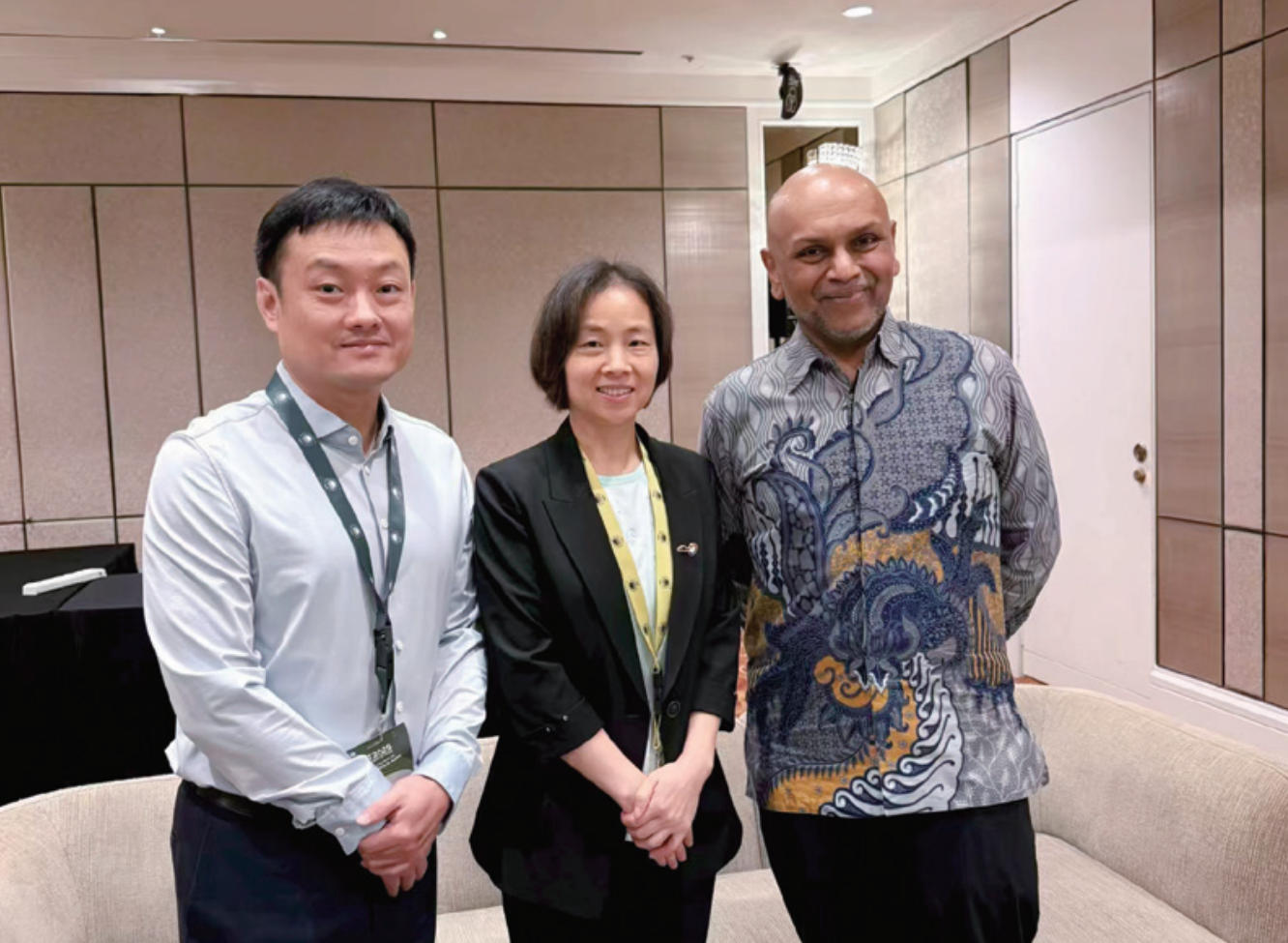
The author of this article poses with the interviewee and Fang Lifeng, head of RSPO China
China: Key driver of global sustainable palm oil development
CST: China is the world鈥檚 second-largest importer of palm oil and has more than 520 RSPO members in China. How do you position China鈥檚 role in the development of sustainable palm oil globally? What specific suggestions do you have for China to implement sustainable palm oil?
JD: China is a key driver and future leader in global sustainable palm oil development. On the one hand, China has a huge market with 1.4 billion consumers and a rapidly growing number of RSPO members, now more than 520, and its demand potential is profoundly driving the transformation of the global sustainable palm oil supply chain. On the other hand, the Chinese government鈥檚 policy orientation of 鈥渆cological civilization construction鈥? 鈥渂eautiful China construction鈥? and 鈥渄ual carbon鈥?is highly consistent with the objectives of sustainable palm oil. China鈥檚 efforts to promote green supply chains and sustainable consumption also provide solid policy support for the growing demand of sustainable palm oil in China. This 鈥渕arket + policy鈥?dual advantage is driving China to become a global leader in sustainable palm oil development.
To this end, there are several ways that China can play a key role to promote the demand for sustainable palm oil:
Firstly, Policy level: Promote the introduction of policies related to green supply chains and sustainable procurement, incorporate RSPO standards into the officially recognized systems by national competent authorities, and provide clear policy guidance for enterprises.
Secondly, at the enterprise level: Deepen the understanding of sustainable palm oil, incorporate it into brand building and supply chain strategies, and drive upstream production transformation through procurement. At the same time, proactively convey sustainable value to consumers, thereby creating a virtuous cycle of 鈥渃orporate promotion 鈥?consumer recognition 鈥?demand growth鈥?
Last but not least, at the consumer level: Collaborate with partners to create awareness through education, enabling consumers to understand that choosing sustainable palm oil not only ensures the acquisition of high-quality products but also supports the improvement of the livelihoods of smallholders in grower countries such as Malaysia and Indonesia, reduces deforestation and biodiversity loss, and stimulates active participation from the consumption end.
CST: RSPO corporate members are at the core of the sustainable transformation of the supply chain. In light of global supply chain practices, what are the typical practices of RSPO in promoting sustainable palm oil supply chains, such as traceability management and smallholder partnerships, that are worth promoting and learning from? Are there any concrete practices?
JD: By adhering to strict global standards, RSPO Members engage in sustainable practices across the full spectrum of the supply chain. 鈥?1. Production: Work directly with the upstream to adopt RSPO standards for sustainable palm oil production; 2. Traceability: Adopt digital transformation by incorporating tools and platforms for end-to-end traceability in response to regulatory and market demands; 3. Communication: Document the impact of RSPO certification on smallholder livelihoods and yields to facilitate better market access; ,. 4. Shared Responsibility: Reinforce a system of shared responsibility comprising 鈥渦pstream sustainable production + downstream priority procurement + reasonable premiums鈥?to reward smallholders for adopting sustainable practices through certification, thus creating a virtuous cycle of 鈥減roduction 鈥?procurement 鈥?income鈥?
RSPO鈥檚 collaboration with NASH, for example,addresses the challenges of 鈥渉igh certification costs, weak technology, and narrow market access鈥?for smallholders. Since its implementation three years ago, the program has helped more than 2,000 smallholders obtain RSPO certification. The average income of smallholders has increased by 15%, and the proportion of certified palm oil production in the purchases of processing enterprises has risen from 10% to 35%, achieving a win-win situation for smallholders, enterprises and the environment.
Empowering young leaders and injecting vitality into future development
CST: The RT 2025 also features a panel discussion on global young leaders. How do you view the unique role and impact of young leaders in advancing sustainable palm oil development?
JD: RSPO places particular emphasis on the participation of young people because youth are the innovation core and future force for sustainable palm oil development. There are several aspects to their unique role:
Upstream innovation empowerment: In major producing countries such as Malaysia and Indonesia, youth are bringing innovative solutions such as smart planting and green technology to address challenges and inject vitality into the future development of the industry.
Consumer-end concept leadership: In consumer markets such as China, Europe and the United States, youth are highly concerned about climate change and the future of the planet and are core drivers of sustainable consumption. When they understand the climate benefits of sustainable palm oil (such as carbon reduction and biodiversity protection), they will become stronger supporters and promoters, driving a transformation in consumption trends at the social level.
Global synergy: The strong cross-regional and cross-cultural collaboration ability of youth can break down barriers between palm oil-producing and consuming countries and promote the adaptation and dissemination of sustainable development approaches in different markets. For instance, Chinese youth can collaborate with their Indonesian counterparts to jointly design a business plan to match 鈥渃onsumer demand with sustainable production practices鈥? enabling the concept of sustainable development to be more effectively disseminated and implemented.
CST: What are RSPO鈥檚 plans for global sustainable palm oil development in the next 20 years? What are your personal expectations?
JD: The future promotion plan of RSPO focuses on three major directions: experience inheritance, issue response, and global collaboration.
Building the next generation of leadership. We believe it is important to attract a new generation of entrepreneurs and professionals to invest their talent and imagination in the industry, so they can find the solutions we will need to continue building a sustainable sector particularly in regions such as China, India and Africa.
Finding solutions to emerging sustainability challenges. While continuing to focus on traditional issues such as deforestation prevention and biodiversity conservation, proactively tackle issues that citizens and policymakers are concerned about, such as climate change adaptation, labor rights protection, and sustainable water use, optimize the standard system, and ensure the forward-looking nature of sustainable practices.
3. Deepen collaboration in emerging markets: In markets like China, which is important for RSPO, strengthen policy and business cooperation to make the RSPO standards an important part of China鈥檚 green supply chain. For potential markets such as Africa, work with local governments (such as the Nigerian state government) to promote smallholder certification and help them establish modern and sustainable production systems.
Of course, I am personally confident about the future of RSPO. At the industry level, I expect sustainable palm oil to become the 鈥渄efault choice鈥?rather than a 鈥渟pecial option鈥?for the global industry within 20 years, making the RSPO standard a universal reference for the sustainable transition of agriculture.
At the market level, emerging markets such as China, India and Africa are expected to become new engines for sustainable development, driving a deep transformation of the global supply chain through the synergy of government and enterprises and consumer guidance, they will drive the global supply chain to undergo a profound transformation.
At the social level, instead of keeping sustainability at the commercial level, it is hoped that sustainable models can truly benefit smallholders and workers at the end of the industrial chain, achieving a long-term win-win situation for environmental protection, economic development and social equity.
 Back
to top
Back
to top