Shekou has transformed itself from an unnoticed fishing village to a highland of green and smart innovation. With a pioneering spirit, China Merchants Shekou Holdings has written a legend of 45 years of hardships and rewards for Shekou Industrial Zone. Its story not only witnesses the extraordinary course of reform and opening up in China, but also reflects the changes of a unique era. As a story of change, innovation and dream in Shenzhen, the landmark in the country’s reform and opening up, it is clear to us how a company has withstood the tests of the times and led its development by reform and innovation to build an ideal residence for human beings.
Shekou has transformed itself from a barren land on the coast of South China Sea to a bustling city with a future of smart innovation. CMSK is not only a trendsetter in the economic wave, but also a pioneer and leader in promoting sustainable development and ESG. On such a passionate journey, the company has taken every step to profoundly respond to the call of the times and its urgent need for transformation.
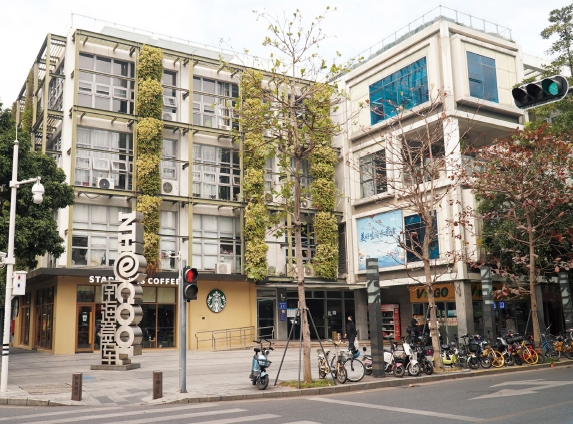
In Shenzhen, a landmark in the country’s reform and opening up, a story of green transformation, innovation-driven development, as well as intelligent upgrading and sustainable development unfolds slowly to tell us how industrial parks in China have ridden the waves of the times and led for the future.
Shekou Leads the Trend of Building Industrial Parks
In 1979, Shekou Industrial Zone began construction, which fired the “first shot” of China’s reform and opening. Subsequently, CMSK initiated the unprecedented infrastructure construction of “five supplies and one leveling”, including water pipes, power lines, roads, navigation lines, communications and land readjustment and turned the wasteland into a factory area. Since then, Shekou Industrial Zone has become the first “test tube” for China’s reform and opening up and taken the lead in embracing the world, which has not only attracted a large amount of foreign investment, but also broken a new ground for China’s economic take-off. Apart from graphic images, iconic old buildings are also witnesses of those passionate years.
The six factories near the sea in Shuiwantou Village were the earliest and most representative ones included in the startup map of Shekou Industrial Zone. The factory area attracted nearly 100 labor-intensive enterprises of different ownerships, including Kader Toy Factory, the TV Factory of HK Luks Electronic Company Limited, and the first wholly-owned enterprise in China established by Sanyo Electric Co., Ltd., making it a frontier and symbol of China’s reform and opening up at that time.
In its heyday, SANYO Electric (Shekou) Limited rented all these factories, which were later called Sanyo Factory. At that time, SANYO, a world-renowned brand like today’s Apple, attracted many industrial workers and management elites across the country to pursue their dreams there. They learned modern corporate management concepts and technologies at this place and gained rich income, and in turn, they brought a number of advanced technological products back to their hometown.
SANYO Factory is a miracle of construction starting from the scratch and a pioneering piloting experience. This makes these old factories not only a simple physical space but also a carrier of memories of struggles and hard-works of a generation that has recorded stories of reform of that era and is destined to continue to write another chapter on a new life and miracles at a new stage of development.
Creativity Drives Transformation in Pursuit of Green Development
When it came to 2005, thanks to economic development and industrial upgrading, labor intensive industries could no longer meet the new needs for development, and the prosperous and bustling scene of SANYO Factory was fading away, with only depression arising from successively vacant factories. CMSK was clear of the urgent need to “vacant the cage to change birds”.
As SANYO Factory stood at a crossroad towards the future, would these old buildings be torn down or renovated?
Decision-makers at that time had only two options at hand: to completely demolish these old buildings and rebuild new ones at the site, or keep these old buildings and renovate them. The difficulty and input cost of the first scheme were relatively low, apparently with considerable profit expectations, while the difficulty of the second scheme was technically high, with a relatively long period of cost recovery. It was easy to tell which choice was better, but unexpectedly, CMSK finally chose the latter one that was more challenging.
“Despite different objections at that time, as the old SANYO Factory was a historical symbol of Shekou that inherited the legacy of Shekou’s development, we cannot just destroy it for mere economic benefits.” Meng Wei, President of CMSK Urban Institute introduced various considerations in the early days of the project. He mentioned that this decision also followed the philosophy of green development imprinted by Yuan Geng on CMSK who put forward the green real estate concept of “creating a natural life where man and nature can coexist in harmony”.
As a “carrier of green development”, CMSK is one of the first responsible enterprises that put forward their green real estate strategy. Since 2004, the International Green Habitat Forum has been held for 14 years around the concept, practices and development trend of green habitat. In 2009, CMSK set up a green real estate R&D center. In 2014, the company established a green R&D and application center and designated a chief green and low-carbon officer. In 2016, the center was upgraded to the CMSK Urban Institute which proposed to “upgrade cities to improve lives” to provide institutional guarantees for green quality construction. In 2021, the CMSK Supply Chain Carbon-neutral Green Quality Construction Convention , the first green convention in China’s real estate industry, was issued to integrate the United Nations Sustainable Development Goals (SDGs) into daily operations and urban upgrading and development.
Based on our understandings of such a journey of green development, the decision made by CMSK is no longer a surprise. After fully considering historical and cultural factors, environmental resources and other factors, CMSK completed the relocation procedures of SANYO Factory at the end of 2005 and decided to transform it into the second-phase project of creative industry park in Shenzhen and rename it “Nanhai E-Cool”. To make it clear, Meng Wei explained, “Why is it called ‘Nanhai’ instead of ‘Shekou’ ? It is because we have a greater ambition to build this project into a demonstration project in South China. ‘E-Cool’ indicates “creative industry” and the transformation from an old warehouse to the project library, with a homonym of ‘cool’”.
Facts have proved that CMSK has achieved creative aspirations revealed in the name. The most difficult part of the transformation was the lack of experience and standards to be followed. Also with the entrepreneurial spirit of being the first, CMSK invited bids globally and attracted a large number of well-known design units and technical teams to offer more than 20 design schemes. More than 60 cutting-edge green technologies, such as temperature and humidity independent control (THIC) air-conditioning system, magnetic levitation high-temperature water chiller, cold-radiation ceiling, photovoltaic building integration, ecological atrium and constructed wetland, were adopted in the reconstruction project, with only half of the energy consumption of similar buildings, making it an epoch-making model of green building in China.
After constant explorations and selections of the optimal scheme, Nanhai E-Cool has taken on a new look in terms of building hardware, façade and functional layout. This is the first theme project in Shenzhen that fully highlights low-carbon design and environmental protection in the renovation project of old buildings, creating a sustainable IP flagship model of green and energy-saving buildings. The project, which won the First Prize of “National Green Building Innovation Awards”, is one of the few projects labelled “Three-Star Green Building Operation” in China.
Nanhai E-Cool has now gathered a group of leaders of cultural and creative industries. Upholding the goals of “driving innovation with culture, prospering business with innovation, and creating culture with business”, Nanhai E-Cool has successfully introduced more than 180 enterprises, including Hasbro, Hermanmiller, L&A Design, Gao Ecological Landscape, Huge Claw Animation Studio, 8BitDo, and Snoppa. These prestigious enterprises have gathered here successively, with an industrial concentration of over 80%. This place is also a new card of Shenzhen’s city culture as tourists label the park with various creative art styles, such as “petty bourgeoisie life”, “slow pace”, “sense of relaxation” and “sense of design”.
Since 2015, based on the successful experience of Nanhai E-Cool, “E-Cool” cultural and creative industrial parks have expanded from Shenzhen to Chongqing, Nanchang and Hefei, forming the key layout of “four cities with six projects” and becoming one of the three major product lines of China Merchants Shekou Industrial Zone across the country. This has played a significant role in promoting the popularization of green buildings in China and the development of China’s cultural and creative industries.
“Every building has its own life cycle from prosperity to recession, and it may glow with new vitality in a new period of time.” Meng Wei expressed more expectations on the future development of “E-Cool” parks. Guided by the policy of carbon peaking and carbon neutrality, CMSK will continue to make more breakthroughs in sustainable and zero-carbon buildings.Despite the passage of time, we can still catch a glimpse of the spirits of iterative growth in Shekou through Nanhai E-Cool, which is valuable and attributes to CMSK’s choice and breakthroughs. Regardless of the change of name, functional upgrading, pioneers in the reform and opening up or modern cultural and creative elites, their love for this place is sincere and hot. These stories of reform and opening up and green development will surely continue to unfold here.
A Highland of Smart Innovation Established for Sustainable DevelopmentIn 2007, Huayi Aluminum Factory, also located in Shekou Industrial Zone, faced the same dilemma as SANYO Factory at a similar crossroad of transformation.
At Huayi Aluminum Factory, one of the earliest joint ventures established in Shekou, the towering chimney was an important landmark at that time, which was vividly called the “thermometer” of industries in Shekou. Through the introduction of advanced management concepts and production technologies, the product structure and product quality were improved, and the factory created the glory of the industrial era, with its aluminum products sold at home and abroad and widely used in various kinds of household appliances.
With the advancement of the times, the towering chimney at the factory gradually contrasted with the surrounding environment, and the production line that had produced 500,000 tons of aluminum plates was shut down as it failed to keep pace with the times. After the factory was relocated, this place became desolate.
In 2009, to implement the strategy of “vacating the cage to change birds”, Guangdong Province moved out low value-added manufacturing industries and brought in high-growth technology enterprises. China Merchants Group closely followed the national strategy and put forward the strategy of “rebuilding a new Shekou” to comprehensively initiate industrial transformation as well as hardware and software upgrading in Shekou Industrial Zone. Subsequently, the old site of Huayi Aluminum Factory ushered in the best time for transformation.
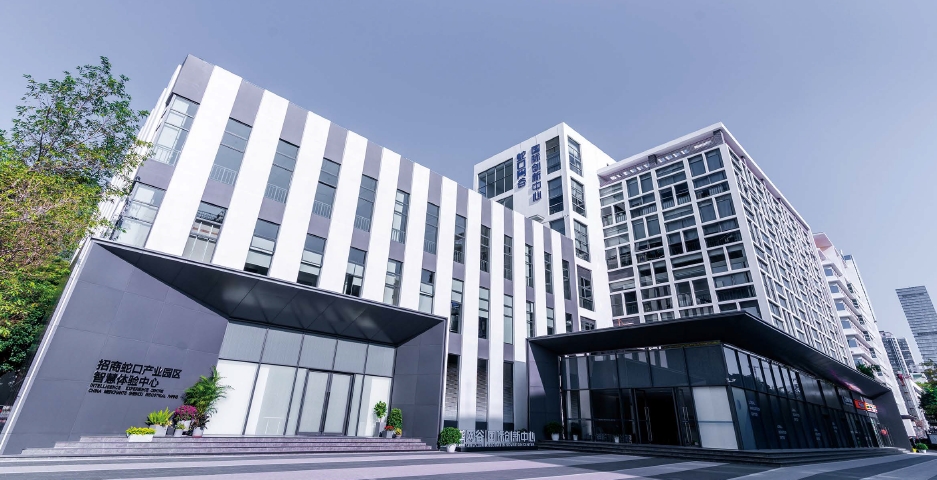
In 2010, CMSK and Shenzhen Nanshan District People’s Government jointly launched the “Shekou Net Valley” project to integrate high-tech and cultural industries at the former site of Huayi Aluminum Factory. Since then, this place has become the center of China’s Internet boom at the beginning of a new millennium.
Shekou Net Valley aims to improve the core competitiveness and development quality of industries, with new-generation information technology, e-commerce, Internet of Things, and digital creativity as its four core industries, and to realize innovation-driven and endogenous growth. It has achieved rapid growth thanks to its precise positioning and its steps consistent with the times. Now 420 enterprises have settled in the area, including Apple, IBM, Philips, Staples and some other Fortune 500 companies, and many leading enterprises in different industry segments have been cultivated, with the degree of industrial agglomeration of more than 70%. This place has become one of the first national demonstration bases of “mass entrepreneurship and innovation” and a “national e-commerce demonstration base”designated by the Ministry of Commerce.
As the pace of development continues, new quality productive forces help make high-quality development and modernization new paths towards a sustainable future. Based on their unique advantages, industrial parks are becoming a new ground that leads the development of new quality productive forces, among which market-oriented industrial parks have stepped up to the stage of innovation-driven development, bringing in some new quality businesses like industrial research, technological innovation, industrial investment, and asset management.To catch up with the times, CMSK has keenly captured these trends and has firmly upheld its strategy of transformation from a “property space operator” to an “industrial development operator”.
The Common Development of Different Industries Fosters a Dream of Green TechnologyIn 2023, to actively answer the national call for technological innovation, CMSK set up China Merchants Shekou Innovation Center (hereinafter referred to as the Innovation Center) with Wanwei Mansion and Venture One Building A in Shekou Net Valley as bases for more pioneering attempts. With focuses on cutting-edge technologies in the three major fields of digital intelligence technology, green technology and life technology, the Innovation Center adopts the collaborative operation mode of “innovation incubation + industrial investment + services for shares” and enhances its empowerment on these industries by closely following the development trends of leading industries in the park.
The “one-stop innovation acceleration platform” can help innovative enterprises carry out technological innovation, scenario testing, as well as transformation and industrialization of technological achievements in a whole life cycle space from incubation to acceleration and maturity. It is also an ideal place for resident enterprises that provides seven kinds of services with 11 subitems, including policy sharing, marketing promotion, creation salon, resource docking, staff accommodation and the smart park operation management system CMInPark APP. Efficient and convenient experience ensures rigorous science and technology a sense of warmth and belonging.
The Innovation Center intended to form a relationship of win-win benefits and common development with resident enterprises. As the Innovation Center team summarized, “China Merchants Shekou Industrial Zone provides not only a spatial carrier, but also services for the whole life cycle of corporate growth, aiming to be a partner of innovative corporate growth across space and time.”
With the operation of more than a year, the Innovation Center has attracted a number of “partners across space and time” to join. Some projects has a strong competitive edge in green high-tech R&D, and the market application of these technologies will bring infinite power for economic and social transformation towards green and low-carbon development, despite that these enterprises often encounter with the dilemma of “valley of death” in the early stage of the transformation of technological achievements. To meet the urgent needs of resident enterprises for funds and resources, the Innovation Center, through innovative industry value-added services, has built a “fast-track station” that connects technology R&D with market application for the transformation of technological achievements.
Hydrogen Peng Technology (Shenzhen) Co., Ltd. (hereinafter referred to as Hydrogen Peng Technology) and Mellow Energy are typical representatives. Hydrogen Peng Technology was a project company founded by Zhong Zheng, Professor and Dean of the School of Science at the Harbin Institute of Technology (Shenzhen) under his leadership. Although key breakthroughs had been made in solid oxide fuel cells, a “bottleneck” technology in the world, there was a lack of relevant experience in corporate operation & management and industrialization. When it was time for Hydrogen Peng Technology to grow bigger, the Innovation Center offered a whole chain of careful services and a variety of policy supports and docking scenarios to the company via a set of scientific and standardized project evaluation system. After successfully attracting angel rounds of financing from China Merchants Startup and Highlight Capital, Hydrogen Peng Technology had the chance to succeed based on the growth momentum of a promising startup.Founded in 2022, Mellow Energy is a company engaged on the research and development of chalcogenide panel technology, which is the next-generation innovative technology in the photovoltaic industry with a promising application prospect. The company finally decided to set up its R&D center in Shekou after analyzing unique resource advantages of this place as a landmark of reform and those warm services provided by the Innovation Center to resident enterprises. The decision has turned out to be correct.
“The Innovation Center team has spared no effort and managed to actively remove all the difficulties and help us dock cooperation resources, which has greatly upgraded the development of Mellow Energy to another level.” “Thanks to the Innovation Center team, your professional guidance has made the dream of Hydrogen Peng Technology come true!” These sincere comments from these “partners across space and time” are the best praises for the Innovation Center.
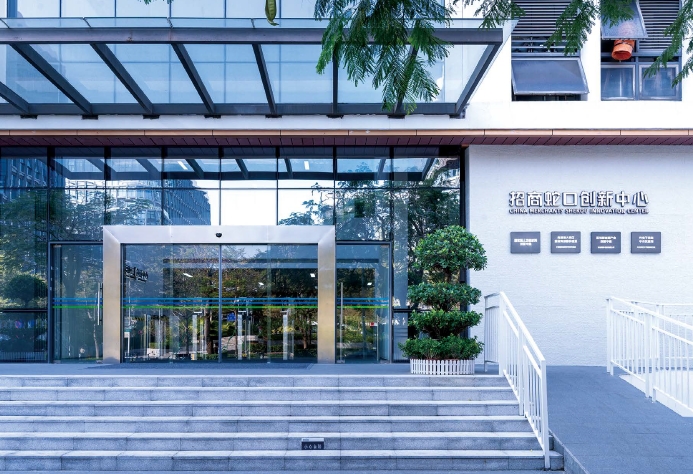
To promote the development of resident enterprises, “In the future, if resident enterprises like Hydrogen Peng Technology and Mellow Energy enter into a higher stage of development, we will also connect them to spaces like Shekou Net Valley and Smart City that can better meet their needs for business expansion. The Innovation Center will continue to attract new projects and support more industries with digital, green and life attributes to achieve growth.”The Innovation Center team expressed its expectations.
The Innovation Center that keeps up with the trend of development is showing a vigorous upward momentum of growth. As its story of growth just unfolds, it is more likely that the center will become popular in the country in the future and continue to lead the trend of high-quality industrial development. With an unprecedented clear and firm mind about the development trend of industrial parks, CMSK is heading for a more sustainable future with the spirit of continuous innovation and exploration.
Over the past 45 years, CMSK has played its roles as a “carrier of green development”, “carrier of better life”, “carrier of transformation and innovation”, “carrier of humanistic harmony”and “carrier of integrity”, with the concept of sustainable development deeply rooted in the vision and mission of the company. These ESG stories of China Merchants Shekou Industrial Zone have been vivid interpretations of green, harmonious and innovative development and wonderful epitomes of the company’s sustainability strategy. With a promising momentum of growth, CMSK led by sustainable development, will surely write a new chapter on its way to build a greener, more harmonious and innovative future.
 Back
to top
Back
to top