Wu Wei, a 45-year-old photographer, is a native of Gaoqian. Over the years, he has been recording the village through his lens. 鈥淔or five generations, my family has been lived here. Every straw and tree, and all the historical relics in this village have left a profound impression on me since childhood. I鈥檝e walked through every building, using my camera to document these old houses and the people that have weathered time.鈥?Each photo Wu takes is etched with the historical traces of his hometown鈥檚 evolution.

With the ongoing urbanization, Gaoqian ancient village has been included in a comprehensive village renovation and upgrade plan. While a series of modern infrastructures have brought convenience to the villagers, the new facilities captured in Wu鈥檚 photos against the backdrop of the old architecture have left him with an unspoken worry. As there are more and more electrical installations, the ancient roofs and walls are criss-crossed with power lines, gradually obscuring the once pristine and historical atmosphere of Gaoqian. Wu has been photographing the village鈥檚 ancient buildings in what feels like a race against time, creating a final tribute to the vanishing classical charm.
鈥淚 feel torn inside,鈥?Wu admitted. 鈥淥n the one hand, I鈥檓 happy to see that our life is getting better and the village is flourishing; but on the other hand, I鈥檓 anxious and concerned. When I look up, I can no longer see the original clear skyline, replaced instead by a growing web of wires and devices.鈥?He felt helpless as these modern elements disrupt the village鈥檚 classical beauty.
In his view, ancient villages with hundreds or even thousands of years of history serve as cultural imprints scattered across urban and rural landscapes, representing invaluable 鈥済ene pools鈥?of Chinese cultural heritage and bearing unique historical memories. However, protecting and developing traditional villages often presents a dilemma. From the perspective of preservation, it is crucial to maintain the village鈥檚 original appearance. But to foster local development and meet villagers鈥?aspiration for a better life, modernization and reconstruction are often necessary.
The Dilemma Between Preservation and Development
Wu Fangqing, who works at the Baita Power Supply Station under State Grid Xianju Electric Power Supply Company( 鈥淪tate Grid Xianju鈥?for short), is also a native of Gaoqian. He is responsible for the village鈥檚 power supply. Years of living and working in the village has made him intimately familiar with every building and household. He knows which families have elderly members who need special attention, which children like to play under the power poles, and even who has illegally tapped into the power lines.
As living standards have improved, every household in the village has accumulated more electrical appliances, leading to a rapid increase in electricity demand. However, many villagers often overlook safety and resort to unauthorized wiring for convenience. Wu not only advises villagers to install proper wiring but also works swiftly to lay new power lines and install equipment to ensure the villagers have access to reliable power supply.
鈥淭he beautiful ancient village is our shared great treasure. The houses here are part of my childhood memories, and the older generation holds deep emotional attachments to them, too. Everyone wants to preserve these buildings, which carry our history and memories. But for reliable power supply, we have no choice but to install power facilities among them.鈥?While the power supply issues are resolved, the ancient village鈥檚 appearance has been disrupted by the electric infrastructure, leaving Wu, who was born and raised here, feeling conflicted.
Despite the fact that power service is a basic public service and plays an important role in the preservation and development of ancient villages, it is not an easy task. The village鈥檚 unique natural environment, architectural styles, layout, and cultural history present challenges in offering power services that balance both preservation and development. Wu and his colleagues have identified three major challenges.
The first challenge lies in power supply safety. In recent years, fires in traditional villages and buildings have occurred frequently, which not only endanger lives and property but also harrowingly destroy precious carriers and records of historical and cultural heritage. Gaoqian鈥檚 buildings are mostly wooden structures, with low fire resistance rating and insufficient fire separation. The village鈥檚 narrow paths, combined with an aging population, poor safety awareness, and issues like prevalent outdated wiring and illegal connections, put the village at high fire risk. Moreover, with the rise of smart home appliances in recent years, and the accelerated development of agricultural products processing and other industries, electrical load demands have surged, so is the demand for the power lines renovation. However, the infrastructure for maintaining behind-the-meter lines is poor, and villagers lack awareness of electrical safety, posing the village in high hidden dangers of power safety.
The second challenge is preserving the village鈥檚 traditional features. In October 2019, the Department of Housing and Urban-Rural Development of Zhejiang Province issued the Guidelines for Preparing the Protection and Development Planning of Traditional Villages in Zhejiang Province. The Guidelines emphasize that, for traditional villages and buildings, it is essential to 鈥減rotect the key features, such as traditional scale, interface, and paving of streets and alleys, the functions, forms, and dimensions of public spaces like village entrances and water systems, as well as skylines and scenic corridors.鈥?鈥淲e should protect historical environmental elements that reflect important traditional characteristics and historical aesthetics, such as ancient wells, walls, stone steps, pavements, embankments, and old trees.鈥?鈥淲e should preserve the original spatial features, architectural forms, traditional materials, and craftsmanship.鈥?However, during the renovation of power lines, the installation of electrical equipment and cables must adhere to technical specifications, including mandatory requirements for materials and construction. These technical needs inevitably disrupt the original features of traditional villages, affecting their spatial layout and visual harmony. As a result, one of the major challenges is finding a balance between the functionality and technical feasibility of power facilities and their compatibility with the village鈥檚 traditional appearance.
The third challenge is developing industries. Since being listed in the first batch of China鈥檚 traditional villages protection directory in 2012, Gaoqian has made great strides in protecting its ancient residential buildings while promoting rural development. At present, the village mainly focuses on cultural tourism, traditional crafts, development of agriculture and specialty products, cultural and artistic education programs, rural homestays, and the catering industry. However, the industrial development of traditional villages faces several challenges, such as small-scale operations, diverse types of businesses, scattered timelines, and weak infrastructure. Combined with the requirements for preserving the village鈥檚 traditional features, delivering efficient power services that balance protection and development for Gaoqian鈥檚 emerging industries presents a significant challenge.
Wu Fangqing is familiar with every brick and stone of Gaoqian, as well as each corner that carries its unique historical stories. He is also keenly aware of the potential power safety hazards that might exist in the houses and businesses. After several rounds of discussions with his colleagues and a comprehensive assessment of Gaoqian鈥檚 preservation and development needs, Wu clarified the new role for their electrical work in this ancient village鈥檚 new phase of development. They shall ensure that the renovation and installation of electrical facilities meet modern development needs while also harmonizing with the village鈥檚 traditional features.
鈥淥ur work cannot follow a one-size-fits-all approach! The standardized lines design and configurations we鈥檝e used elsewhere cannot be applied here in Gaoqian. We must tailor solutions to the unique spatial and physical characteristics of each building, as well as to the specific functional needs of cultural displays, traditional residences, specialty businesses, and leisure spaces,鈥?Wu said excitedly, having finally clarified his approach. 鈥淟ike delicate embroidery, we will use micro-renovations to eliminate power safety hazards and upgrade the power infrastructure.鈥?His plan for meticulously 鈥渕ending鈥?Gaoqian鈥檚 power needs soon unfolded at the Baita Power Supply Station in Gaoqian.
Normally, the power supply company鈥檚 responsibility ends at the user鈥檚 electricity meter box, and users shall be responsible for the choice and installation of 鈥渂ehind-the-meter鈥?electrical wiring and equipment. In the past, during peak electricity usage in the summer, villagers were hesitant to use high-powered appliances due to frequent circuit tripping, always worrying about power safety accidents.
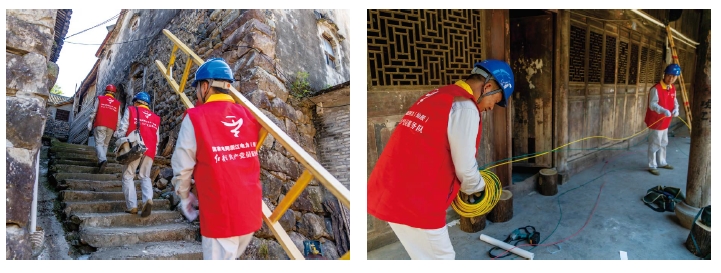
To eliminate 鈥渂ehind-the-meter鈥?safety hazards, Wu and his colleagues, together with the village committee, conducted a comprehensive 鈥渆lectricity health check鈥?on every house. They inspected distribution transformers, electrical boxes, main circuit protectors, household leakage protectors, and the power lines along the ancient streets. Based on this inspection, they predicted the power load for both production and daily life, proposing line improvement plans for each house and determining the layout and direction of power lines. They also communicated with villagers one by one, ensuring they understood and supported the plans. After the renovation, tripping was no longer an issue even with multiple appliances running, and the villagers gave their thumbs-up to the 鈥渉ealth check and renovation鈥?initiative.
Qiganli, one of the better-preserved ancient buildings in Gaoqian, is a triple-courtyard wooden house, with severely aged wiring. Wu and his colleagues tailored a renovation plan, applying five safety measures: one switch per line, fireproof coatings, fire alarm installations, fire isolation belts, and antique-style lightning protection devices. These measures have significantly improved the safety of Qiganli鈥檚 power system, effectively addressing the challenges of safe electricity use.
As of October 2024, State Grid Xianju has completed electrical health checks for 11 houses in Gaoqian and provided corresponding solutions, reducing behind-the-meter line repair requests from eight in 2023 to only two in the first half of 2024.
To preserve the village鈥檚 cultural heritage and protect the appearance of its ancient buildings, while also balancing the functionality and technical feasibility of power facilities, the Baita Power Supply Station in Gaoqian proposed the concept of 鈥渋ntegrating power equipment into the scenery鈥? This approach shifts away from standardized power renovation. Instead, they work with architectural design professionals, to explore 鈥渃ustomized鈥?upgrades based on the scale of the streets, architectural styles, functionality of the electrical equipment, and technical requirements. 鈥淲e make full use of existing facilities such as fences, flower beds, benches, sculptures, and bulletin boards to conceal electrical equipment, so as to address specific issues like line routing, material selection, and color matching. For transformers, poles, and lines that couldn鈥檛 be buried or hidden, we apply special treatments to their appearance, materials, colors, and craftsmanship to integrate them as much as possible with the traditional surroundings.鈥?Wu and his colleagues, along with architectural design experts, worked tirelessly to implement underground, concealed, relocated, and modified power infrastructure solutions.
So far, State Grid Xianju has completed 8 renovations in the village, buried, concealed, relocated or renovated 10 power facilities and lines, and provided power support for key projects and major festivals at the Gaoqian Academy and surrounding roads. These efforts have not only preserved the architectural landscape but also aligned the electrical infrastructure with modern needs.
In recent years, Gaoqian village has focused on developing cultural tourism, creating a comprehensive historical and cultural destination featuring learning, sightseeing, dining, accommodation, shopping, and entertainment. In early 2024, Gaoqian was recognized as a 鈥淶hejiang Ecological and Cultural Base鈥? opening new development opportunities for the local traditional handicrafts, agriculture and specialty products, cultural and artistic education programs, rural homestays, and the catering industry. These new industries, characterized by their small scale and diverse types, brought differentiated electricity demands, which were quickly put on the top of the agenda for power upgrades. To address the power needs with targeted solutions, State Grid Xianju worked closely with project parties, tailoring power support plans based on the timing, location, and unique electricity features of each project. They commit to the 鈥渋ntegrating power equipment into the scenery鈥?concept, paying particular attention to the balance between protection and development.
State Grid Xianju has installed diversified power infrastructure for Shende Hall and Xingshen Hall to support the lighting needs for art exhibitions. At the same time, they reconfigured the electrical circuits and other power facilities and integrated them within the framework of the ancient buildings. In April 2024, a landscape photography exhibition by the renowned photographer Xu Xiaofeng was held at Shende Hall; in May, a poetry and landscape painting exhibition by the famous artist Wang Beiqiu was held at Xingshen Hall.
Due to its diverse natural and cultural heritage, Zhejiang has preserved numerous traditional villages. As of 2023, the province had 701 villages listed in China鈥檚 traditional village protection directory, including 79 in Taizhou City and 35 in Xianju County. To meet the electrical and development needs of traditional villages with meticulous power services is to preserve their unique appearance while enhancing the reliability and inclusivity of power services. The innovative solutions of State Grid Xianju set an excellent example for the preservation and sustainable development of traditional villages, which are easily replicable in other regions. Their solutions support the growth of tourism and related industries whiling assisting in preservation of historical and cultural heritage.
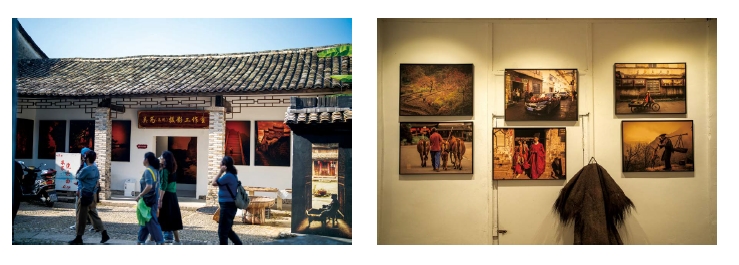
In June 2024, Wu Wei held his first solo photography exhibition, Hometown, in Gaoqian village, and his Wu Wei (Gaoqian) Photography Studio also officially opened. 鈥淓very brick and tile here tell its own story,鈥?Wu said emotionally. 鈥淚鈥檓 delighted that the villagers are not only preserving the beautiful old houses but also enjoying the conveniences of modern life. I am willing to be a listener and a recorder, capturing these precious moments and sharing them with the world.鈥?
Source: 2024 Stories of Corporate Social Responsibility in China
 Back
to top
Back
to top