
Solution:Care Campaign for Lemon Babies
Challenge
In China, thousands of children are born each year with rare inherited metabolic disorders. Methylmalonic acidemia (MMA) and propionic acidemia (PA) are two such conditions. Children with MMA or PA cannot metabolize four essential amino acids found in ordinary food. Without specialized metabolic formula—their only viable source of nutrition—they face severe developmental damage or death.
Called "Lemon Babies" for their distinctive yellow skin tone caused by acidosis, these children face three compounding crises: supply scarcity, prohibitive cost, and information failure. Rare disease awareness among healthcare providers and the public remains low. Over 80% of rare disease families have experienced formula supply interruptions, causing developmental regression or worse.
Solution
Alibaba Philanthropy and Alibaba Health launched the Care Campaign for Lemon Babies with government agencies, hospitals, pharmaceutical companies, and patient organizations. The program has three goals: get it delivered, make it affordable, and help families manage it.
Supply Security: The “supply-by-demand” model
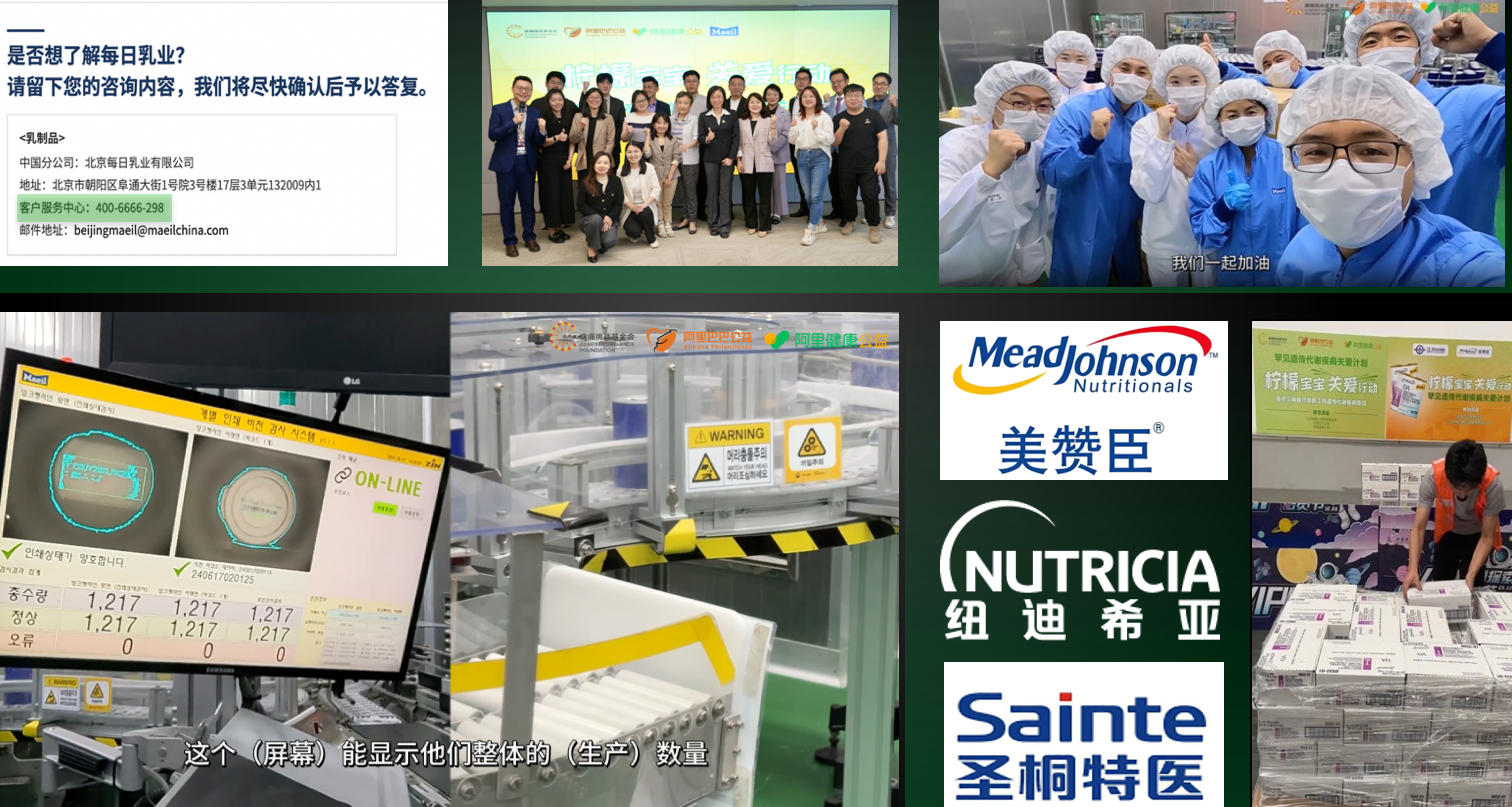
The program pioneered a “supply-by-demand” model—aggregating nationwide patient demand and sharing it directly with manufacturers to plan production. Working with partners including Mead Johnson China and Shengyuan Yutong, the initiative established dedicated production lines for specialized metabolic formulas across all 31 provinces. In May 2025, China's first domestically produced specialized metabolic formula was launched—ending dependence on imports, reducing costs, and improving supply security.
Financial and Medical Aid
The initiative provides layered support: for infants (0–12 months) identified through newborn screening: 12 months of specialized formula plus medical financial assistance. For children from hardship families: ongoing formula and treatment financial support. A multidisciplinary team outpatient clinic provides coordinated specialist care, while the "Lemon Baby Diet Calculator" mini-program helps parents calculate precise amino acid intake, reducing metabolic crisis risks.
Research and Public Awareness
The initiative partnered with Shanghai Xinhua Hospital on a real-world evidence study, generating clinical data compiled into a landmark research report. Educational videos reaching millions of viewers have built public understanding of newborn screening, early diagnosis, and lifelong disease management.
Impact & Value
The initiative has transformed specialized formula from a scarce commodity into a system-served right. The "Lemon Baby Diet Calculator" is now in daily use by hundreds of families, providing clinical-grade management tools previously available only in hospitals. Improved home disease management reduces emergency admissions and improves long-term outcomes.
Through sustained public education, social attitudes are shifting—understanding replaces stigma. Rare disease patients are increasingly seen as individuals to be included in schools, workplaces, and communities.
The “supply-by-demand” model demonstrates a replicable approach: by surfacing unmet demand and creating reliable market signals, it incentivizes manufacturers to invest in products they would otherwise ignore. This market correction works.
For participating families, financial relief is immediate and substantial. For the broader rare disease ecosystem, the program provides a clinical, operational, and policy template that other organizations can adapt and scale. The model is already being studied across China.
To date, the initiative has deployed over RMB 7.43 million in charitable donations. Twenty-four neonatal screening centers and pediatric hospitals have endorsed the "Unlimited Care Initiative for Newborns," committing to early detection and coordinated care for every baby identified with MMA or PA. The program is building a more inclusive society—one where a child's health is not determined by the rarity of their condition.